Air Quality
Is Your Indoor Air Quality Making You Sick? Here's How to Tell
6 mins
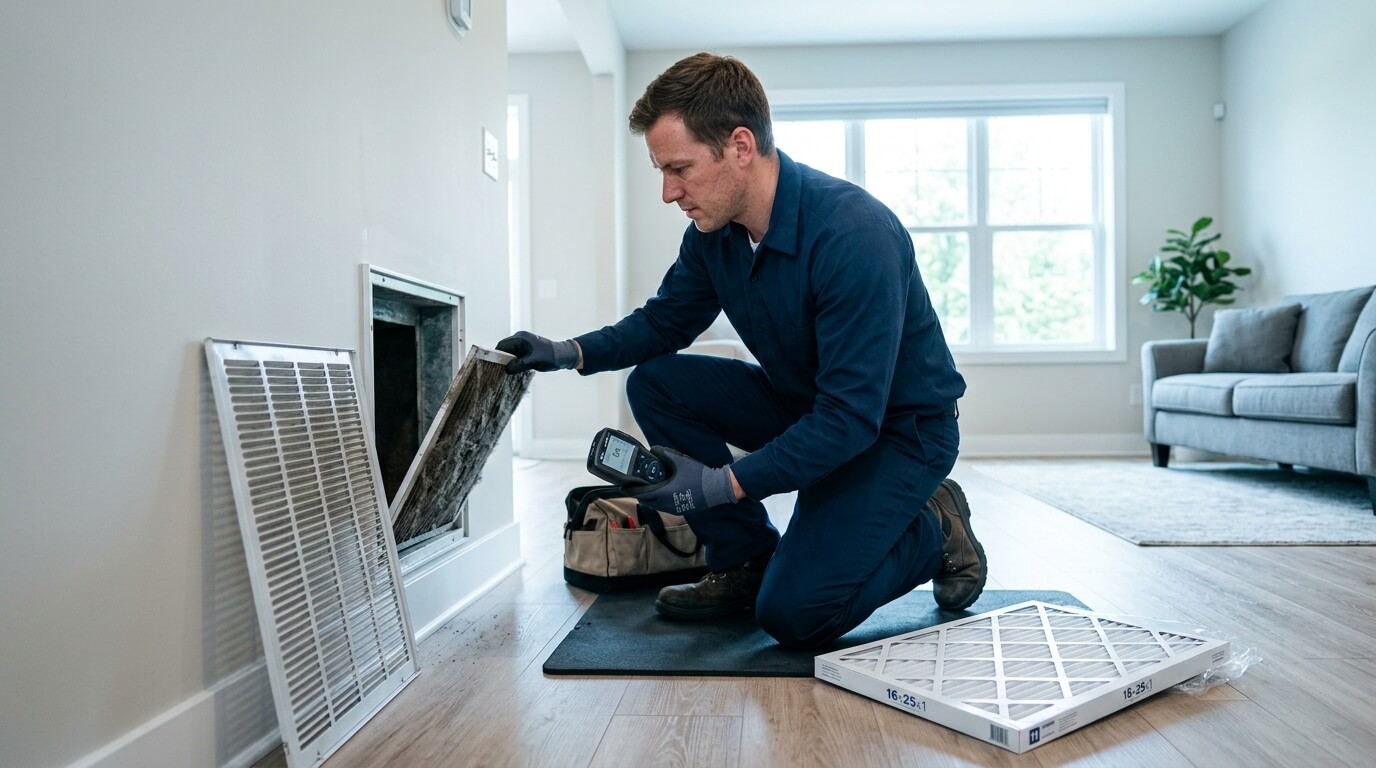
Most people think about air quality when they're outside — wildfire smoke, pollen counts, smog alerts. But the air inside your home can be just as much of a concern, and often gets far less attention. The EPA has reported that indoor air can be significantly more polluted than outdoor air in many homes, largely because modern, well-insulated houses trap contaminants inside rather than letting them dissipate.
Common symptoms linked to poor indoor air quality
Frequent headaches or fatigue that improve when you leave the house
Worsening allergy symptoms indoors
Persistent coughing, throat irritation, or sinus congestion
Difficulty sleeping, particularly if a bedroom feels "stuffy"
Aggravated asthma or respiratory conditions
If these symptoms seem to track with time spent at home rather than a seasonal allergy pattern, indoor air quality is worth investigating.
What's actually in the air
Dust and particulate matter — from everyday activity, pet dander, and outdoor pollution that enters through doors, windows, and gaps
Mold spores — often linked to humidity issues or moisture buildup in ductwork, crawlspaces, or around HVAC coils
VOCs (volatile organic compounds) — off-gassed from paint, furniture, cleaning products, and even some building materials
Carbon monoxide — a serious concern near any gas-powered appliance, including furnaces and water heaters
Excess humidity or dryness — both extremes create their own problems, from mold growth to irritated sinuses
How HVAC professionals check indoor air quality
A proper assessment usually combines a few tools and checks rather than a single test:
Particle counters to measure dust and fine particulate levels
CO2 monitors to assess how well a space is ventilated — high CO2 usually means stale, poorly circulated air
Carbon monoxide detectors, especially near combustion appliances
Humidity and temperature readings, since both affect comfort and mold risk
Visual inspection of filters, ductwork, and coils for dust buildup, mold, or moisture
What actually helps
Upgrade your air filter. A higher-MERV-rated filter captures more particulates, though it's worth having a technician confirm your system can handle the increased airflow resistance.
Add a dedicated air purifier or UV light system for homes with allergy sufffers or high pollutant exposure.
Address humidity levels directly. A whole-home dehumidifier or humidifier, matched to your climate, does more for comfort and air quality than most people expect.
Improve ventilation. Many modern homes are sealed tightly for energy efficiency, which unfortunately also traps pollutants. An energy recovery ventilator (ERV) can bring in fresh air without sacrificing efficiency.
Get your ducts inspected. Ductwork that hasn't been cleaned in years can circulate dust and allergens through every room in the house.
When to call a professional
If you're noticing symptoms that improve away from home, if you can visibly see mold near vents, or if it's simply been years since anyone looked at your filtration and ventilation setup, a professional indoor air quality assessment is a reasonable next step. It's a relatively quick visit that can identify concrete, fixable issues — rather than guessing at air fresheners and hoping symptoms improve on their own.
Other Journals
Keep reading

Call now for same-day service or book online in under 2 minutes. Licensed, insured, and satisfaction guaranteed.
Ready to get comfortable again?
wORKING HOURS
Mon – Fri: 8:00 AM – 6:00 PM
Saturday: 9:00 AM – 3:00 PM
Sunday: Closed (Emergency service available)
operating areas
Illinois, Missouri, Indianan, Iowa and surrounding communities within a 25-mile radius
Address
128 Maple Ridge Avenue,
Suite 4, Springfield, IL 62704
Phone
© 2026 Callout, designed by Samuel Tengan