Maintenance
Repair or Replace? How to Know When It's Time for a New HVAC System
7 mins
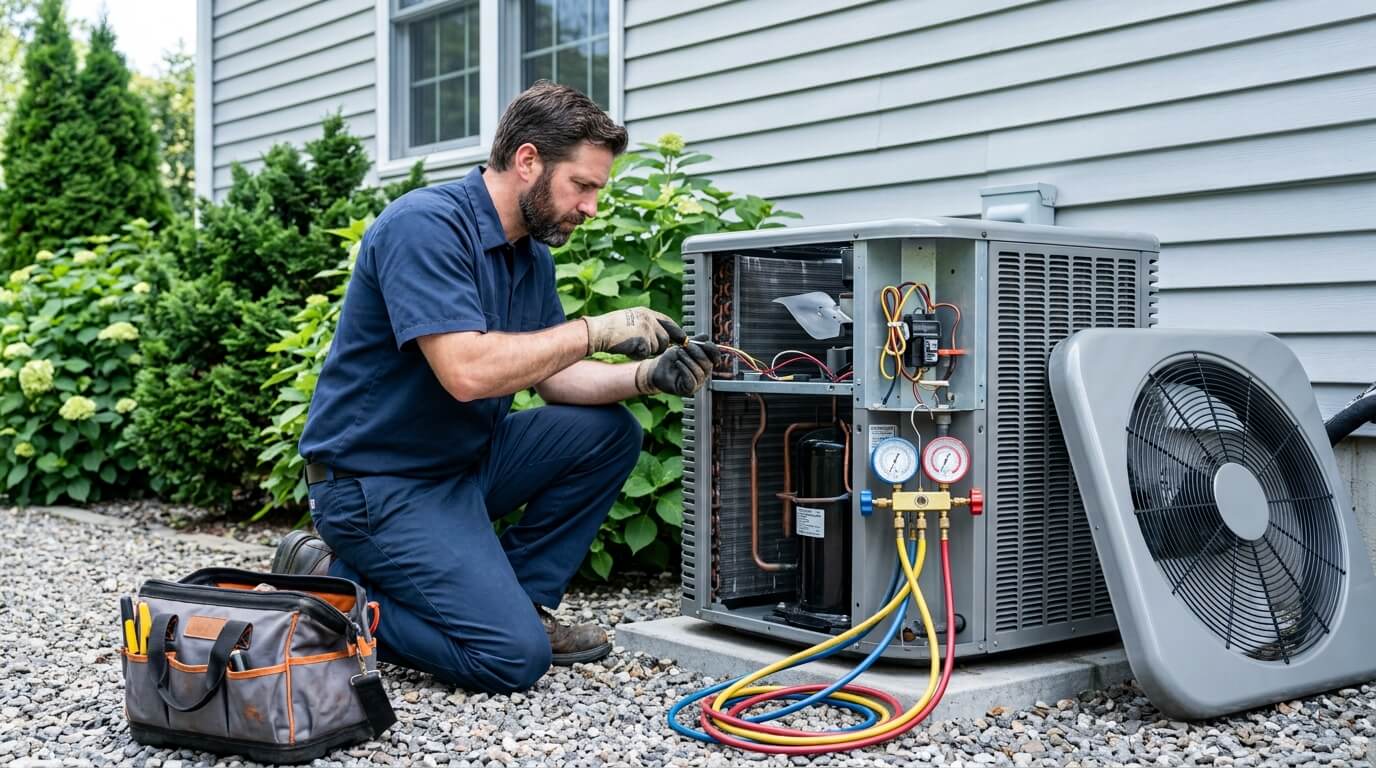
Few home maintenance decisions feel as high-stakes as deciding whether to repair an aging HVAC system or replace it entirely. Repair is usually the cheaper option in the moment, but it isn't always the smarter one long-term. Here's a practical framework for making the call.
Start with the age of your system
Under 10 years old: Repair is almost always the better choice, assuming the issue isn't tied to a manufacturing defect or major component failure.
10–15 years old: This is the gray zone. The right call depends heavily on the repair cost, the system's efficiency, and how many other issues have come up recently.
15+ years old: Most HVAC systems are approaching or past their expected lifespan at this point. Even a moderate repair bill may not be worth it if the system is likely to need another repair soon after.
The "5,000 rule"
A commonly used industry guideline: multiply the age of your system by the estimated repair cost. If that number exceeds $5,000, replacement is usually the more financially sound choice. For example, a 12-year-old system needing a $500 repair (12 × 500 = 6,000) would lean toward replacement under this rule, while a 4-year-old system with the same repair cost (4 × 500 = 2,000) clearly favors repair.
This is a rule of thumb, not a hard formula — but it's a useful gut check when a repair estimate comes in and you're not sure how to weigh it.
Signs that point toward replacement
Frequent repairs. If you've called for service more than once or twice in the past year, the cumulative cost — and the inconvenience — often outweighs the cost of a new system.
Rising energy bills. Aging systems lose efficiency gradually. If your bills are climbing without a change in usage, a new, higher-efficiency system can often pay back part of its cost through energy savings over time.
Uneven heating or cooling. If some rooms are noticeably warmer or cooler than others despite an otherwise functioning system, it may point to a system that's undersized, poorly matched to your home, or simply wearing out.
Outdated refrigerant type. Older systems using refrigerants that have been phased out can be expensive to service, since the refrigerant itself becomes harder and pricier to source over time.
Major component failure. A failed compressor or heat exchanger is often expensive enough on its own to make replacement the more sensible option, especially on an older system.
Signs that point toward repair
The system is relatively young and has an otherwise clean maintenance history
The issue is isolated and inexpensive to fix (a capacitor, a belt, a minor refrigerant top-off)
The system has been well-maintained with regular tune-ups
You plan to move in the near future and don't want to invest in a full replacement
Consider efficiency gains, not just failure risk
Even a system that's technically still functioning may be worth replacing if it's significantly less efficient than current models. HVAC efficiency standards have improved substantially over the past decade, and a new system can sometimes pay for a meaningful portion of itself through lower energy bills over its lifetime, separate from any repair-cost math.
Get a second opinion for major decisions
Replacement is a significant investment, and repair estimates can vary between technicians. For anything beyond a minor fix, it's worth getting a clear breakdown of the issue, the repair cost, and an honest assessment of the system's remaining expected lifespan before committing either way.
The bottom line: age, repair frequency, and the size of the current repair bill relative to a replacement cost are the three factors that matter most. When in doubt, a straightforward professional inspection can usually settle the question with real numbers instead of guesswork.
Other Journals
Keep reading

Call now for same-day service or book online in under 2 minutes. Licensed, insured, and satisfaction guaranteed.
Ready to get comfortable again?
wORKING HOURS
Mon – Fri: 8:00 AM – 6:00 PM
Saturday: 9:00 AM – 3:00 PM
Sunday: Closed (Emergency service available)
operating areas
Illinois, Missouri, Indianan, Iowa and surrounding communities within a 25-mile radius
Address
128 Maple Ridge Avenue,
Suite 4, Springfield, IL 62704
Phone
© 2026 Callout, designed by Samuel Tengan